Tanja Höls, a janitor in a library in Germany, discovered a box full of coins that may be worth millions. The staff think the box may have been hidden in the library in the early 19th century by local prince-bishops who wanted to dodge some taxes.
Tanja will be promoted to the curating department of the library and will receive a reward.
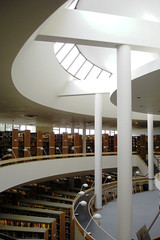
The gorgeous Mount Angel Abbey Library is one of the libraries featured in this Cubed story on Architectural Libraries. Seattle, Baltimore, and Oslo are definitely worth a look, too!
One of our past presenters, Sam Wallin from the Woodland Community College in Woodland, WA, has some absolutely hilarious videos on his YouTube channel . They are called "Libraryland!" and are "little shows about working in the public library." If you hit play after following the link, it will play the entire series for you. Most are under a minute and well worth watching. Sam was part of the Marketing Your Library: Strategies for the 21st Century presentation at our 2011 conference.
It was hard to choose just one for an example, because they're all good, but I 've heard people do this before:
Oops!
Which of these videos made you laugh the hardest? For me, the laughs were cumulative - the more I watched, the funnier they got.
Have any of you used YouTube as a marketing tool for your library? How has it worked for you? What strategies have you implemented from this conference session?
Today's guest post is from Sylvia Bowers who has worked at the Baker County Library District for 7 years. She manages the magazine and newspaper collections for the main library, branches & bookmobile. She also works on the circulation desk, processes books and helps with interlibrary loan. "It's a wonderful job and I love it!" she says. She started the LSSC program in January 2010, and is partway through her fourth class.
I am about 1 ½ years and 3 ½ competencies into the Library Support Staff Certification process. We all know that growth and change are challenging, sometimes difficult and often exciting. I decided to begin the LSSC program because after having worked at my library for 6 years, I felt there were fundamental gaps in my understanding of what libraries were all about (mission) that I wanted to fill, and I wanted to gain library-specific skills that would help me do my job better, such as helping a patron with a reference question. It was time for me to find a way to grow and learn and change.
Even though the LSSC program is very flexible in allowing you to choose your own path - portfolios or classes - I’ve chosen to take classes exclusively. This works really well for me because it keeps me on a schedule and keeps me focused. I’ve completed three classes and am in the middle of the fourth one right now. I really enjoy the online learning experience. I’ve taken “Reference” from Infopeople, “Communication, Teamwork and Decisionmaking” from Fresno Pacific University, “Library Technology” from Northern Kentucky University and am currently taking “Foundations of Library Services” also from Northern Kentucky University. Each class has provided a balance between practical skills I can use every day and foundational knowledge about the library profession.
The benefits I’ve experienced from pursuing certification have been numerous.
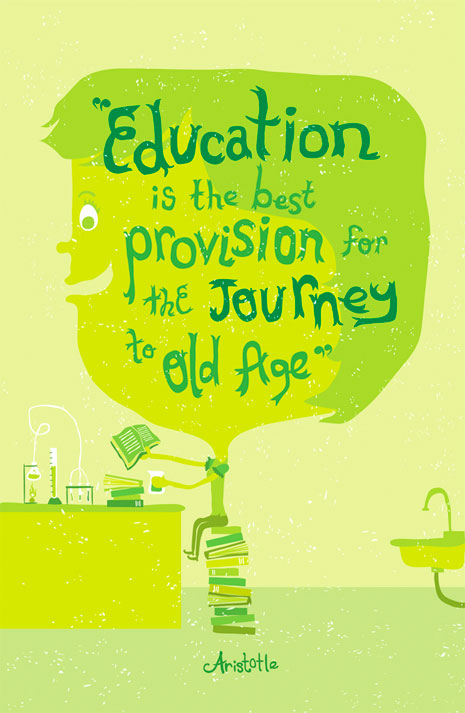
I stumbled on these posters from Nate Koehler today. They remind me of the illustrations in books I read as a child. They really are gorgeous. You can find the whole set at Nate's website or at design work life .
Today's guest blogger is Melinda Williams with Multnomah County Library. Melinda has been both a Library Page and Clerk during her tenure at MCL. We are pleased to have her writing about Basic Book Repair for Libraries.
I left the conference full of energy and excitement about how I can apply the information I learned to my library life. On of the key things I wanted to review were my experiences in the book mending workshop. My main goals for the conference were to gain a more in depth understanding of book mending, learn more about how other libraries function, and network with support staff outside MCL.
The book mending workshop was educational and entertaining. My expectations were that we would specifically focus on the how-to and not the why of book mending but I was pleasantly surprised. I appreciate that the instructors, Carolee Harrison and Kristen Kern from PSU, spent time explaining book preservation theory and gave us preservation resources. A few key repairs that I think will be useful on a daily basis at the branch are reattaching loose pages and repairing a loose book cover or back. The workshop focused mostly on repairing hardback books and the materials needed in a repair kit. I was curious about repairing paperbacks but the instructors mentioned in passing that paperbacks are generally created from low quality materials and therefore repair is not cost effective. I would recommend the book repair workshop to anyone who is interested in the preservation of books in a broader sense.
I was also excited about the opportunity to network with other support staff about their experiences in their library systems. I was able to do this by volunteering to staff the registration/raffle table during lunch as well as chatting to people in my book mending workshop during breaks. I am grateful that I had the opportunity to learn about how people came to be clerks, pages and library assistants and their duties on any given day.